When discussing synthetic rubies, one of the most commonly asked questions is: What do you call a large, finished crystal of synthetic ruby? The correct technical term for this is a “boule”.
What Is a Boule?
A boule is a large, uncut synthetic crystal that is produced in a lab during the crystal growth process. In the case of synthetic ruby, boules are typically created using a process called the Verneuil method (also known as flame fusion).
These boules are often cylindrical or cone-shaped and can reach impressive sizes. They are later sliced and faceted into gemstones or used in industrial applications.

Key Characteristics of a Synthetic Ruby Boule:
- Composed of aluminum oxide (Al₂O₃) with chromium for color
- Lab-grown and chemically identical to natural ruby
- Large, often flawless crystal mass
- Red color is vibrant and evenly distributed
- Ready for further processing (cutting, faceting, polishing)
How Is a Boule Made?
The most common method for creating synthetic ruby boules is the Verneuil process, where powdered aluminum oxide and chromium are melted using a high-temperature flame and slowly crystallized into a large ruby boule. Other methods include flux growth and hydrothermal synthesis, though these are less commonly used for ruby due to higher cost and slower production.
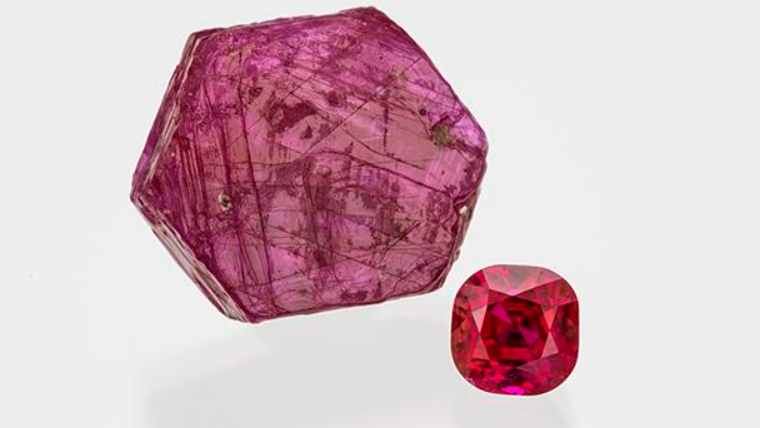
Difference Between a Boule and a Finished Gemstone
| Feature | Boule | Gemstone |
|---|---|---|
| Form | Raw, uncut crystal | Cut and polished |
| Use | Material source for further processing | Jewelry, laser, or instrument |
| Appearance | Often cylindrical or cone-shaped | Faceted or cabochon |
Common Uses of Synthetic Ruby Boules
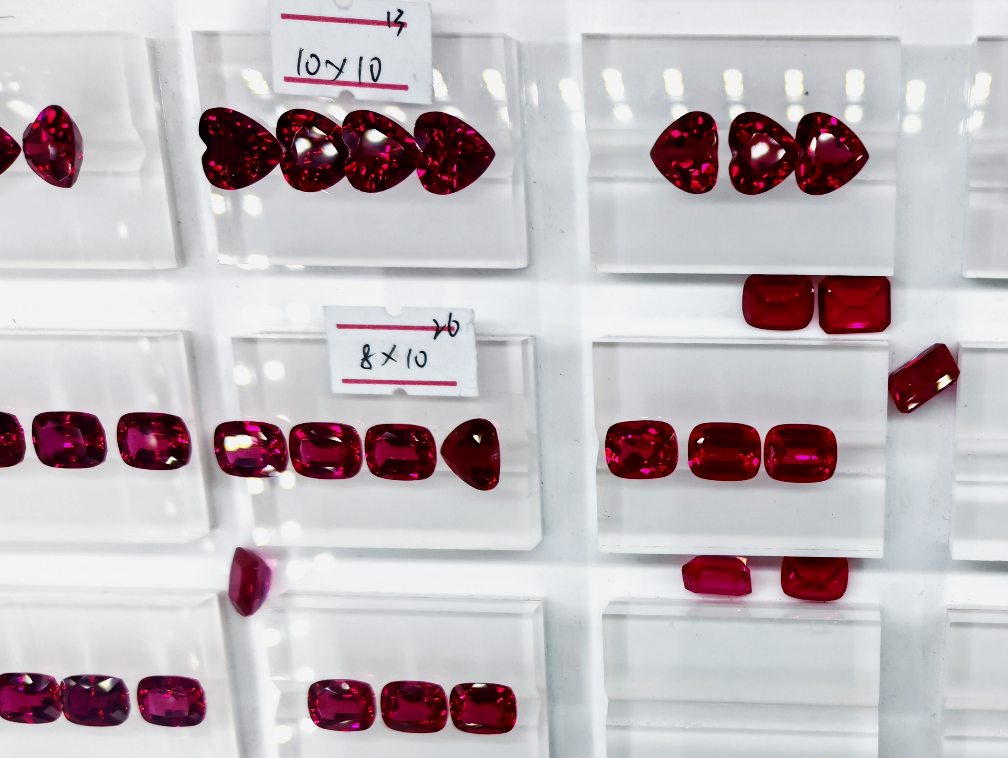
- Jewelry: Cut into ruby gemstones for rings, earrings, and pendants
- Laser technology: Ruby lasers use synthetic ruby crystals as gain media
- Industrial instruments: Bearings, windows, and measuring tools
FAQ
Q: Is a boule a fake gemstone?
A: No, a boule is a real synthetic crystal with the same composition and properties as a natural ruby. It’s lab-created, not mined, but chemically identical.
Q: How big can a synthetic ruby boule get?
A: Some boules can grow over 25 cm (10 inches) in length and weigh several kilograms depending on the method used.
Q: Can you buy a boule instead of a cut ruby?
A: Yes, boules are sometimes sold to lapidary artists or industrial users who cut and shape them based on their needs.
Q: Are all synthetic rubies made as boules?
A: Most are, especially those created using the flame fusion method. Other growth methods may produce differently shaped crystals, but “boule” remains the general term.
Conclusion
The term “boule” refers to a large, finished crystal of synthetic ruby produced in a laboratory. It serves as the raw material for ruby gemstones and plays a key role in both jewelry and high-tech applications.
If you’re interested in sourcing synthetic ruby materials or understanding their industrial uses, feel free to contact us for expert guidance and solutions.