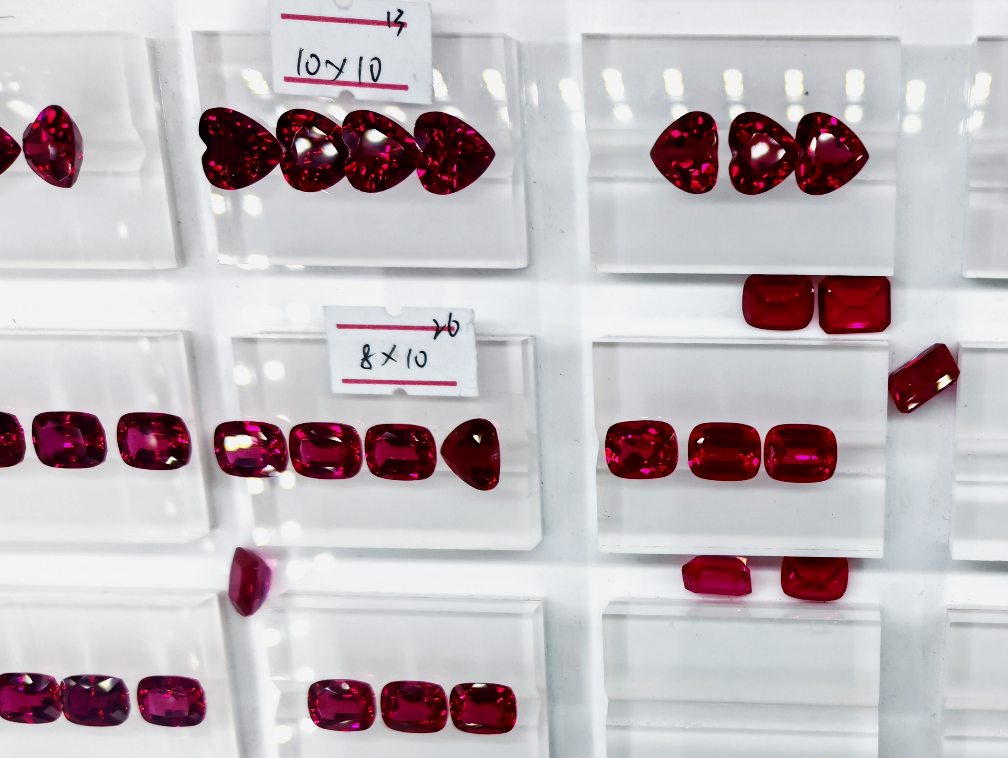
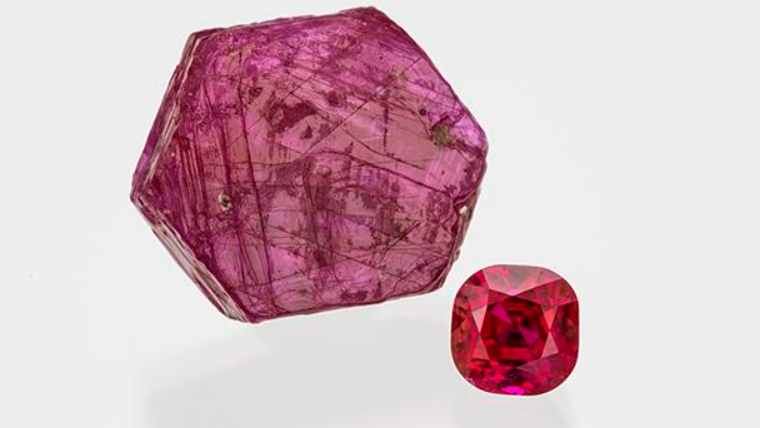
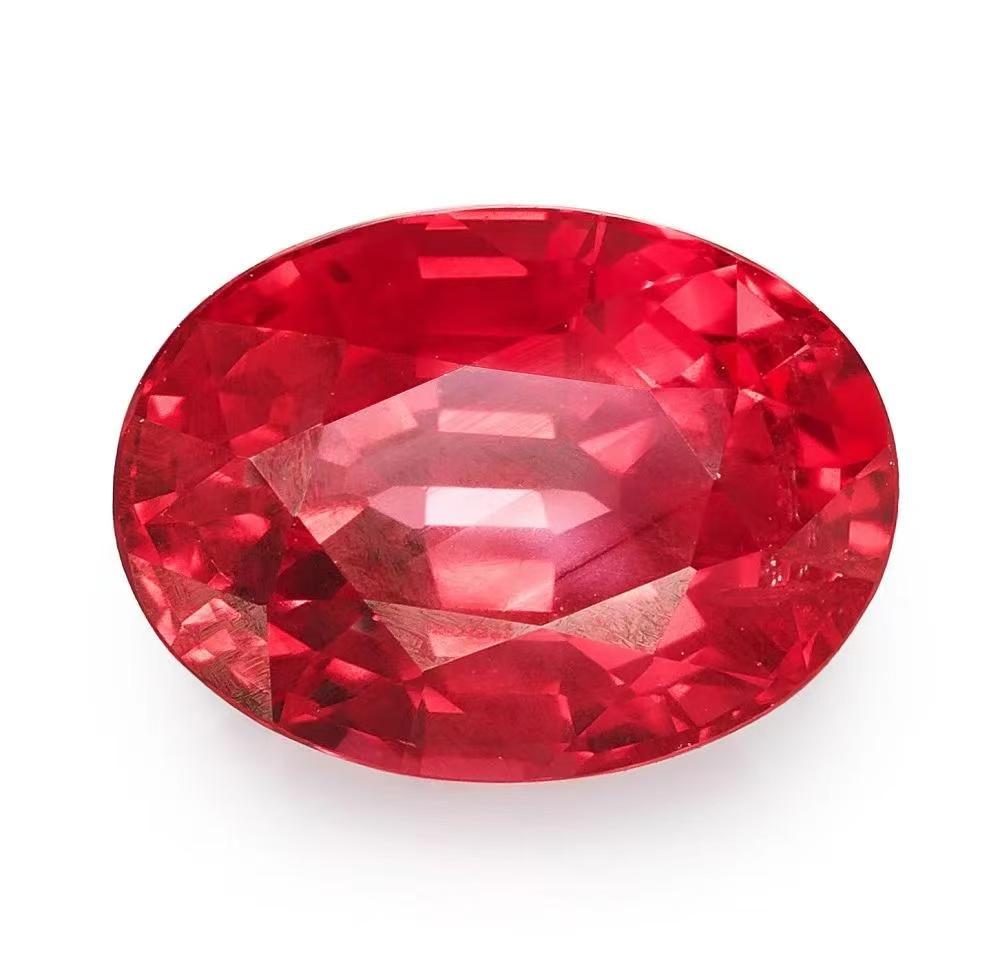
Natural rubies undergo millions to hundreds of millions of years of forging under high temperature and pressure deep in the Earth to condense into that fiery and dazzling red, becoming rare treasures in the world. Artificial synthetic rubies, on the other hand, are the power of human beings simulating nature’s creation. With technology as fire and craftsmanship as a guide, aluminum oxide powder undergoes a “rebirth from fire”, reproducing the brilliance and texture indistinguishable from natural rubies. This journey does not require a long geological wait, but it is also full of high-temperature roasting, precise control and the precipitation of time. Every synthetic ruby is a crystallization of the resonance between technology and nature.
Starting Point of the Journey: Material Selection and Refining, Laying a Solid Foundation for Rebirth
Any rebirth starts with a solid foundation. The journey of synthetic rubies begins with selecting the purest raw materials. Its core raw material is high-purity aluminum oxide (Al₂O₃) powder, with a purity of more than 99.99%, to eliminate any impurities affecting the color and clarity of the gemstone — just as before the formation of natural rubies, sufficient pure mineral base needs to accumulate in the geological layer. At the same time, a small amount of chromium element needs to be added as a colorant, which is the “soul” of the ruby’s fiery red color. Just like in natural rubies, the accidental infiltration of chromium element endows it with a unique color.
After the raw materials are prepared, they need to go through strict drying and grinding processes to fully mix the aluminum oxide powder with chromium element to make uniform and delicate raw material powder. This ensures that the color can be evenly distributed in the subsequent synthesis process, making full preparations for the “fire baptism” link. This step is the ultimate pursuit of purity and the foundation for synthetic rubies to be comparable to natural gemstones.
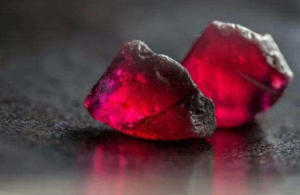
Core Journey: Three Major Processes, Interpreting the Legend of Rebirth from Fire
At present, the mainstream synthetic processes of rubies, although different in paths, all revolve around “simulating the natural geological environment”, allowing raw materials to undergo crystallization and growth in high temperature, high pressure or specific media to complete the transformation from powder to gemstone. Each process is a unique “fire test”, ultimately nurturing brilliant crystals.
Process 1: Verneuil Method — Rapid Transformation in the Sea of Fire
The Verneuil method is the most classic and mature synthetic process, which can be called the “entry-level path of rebirth from fire” for synthetic rubies. Since its invention in 1902, it has been the core method for mass-producing synthetic rubies. This “fire baptism” takes high-temperature flame as the core, directly forging raw material powder into gemstone crystals.
In the process, the mixed aluminum oxide and chromium powder will evenly fall into a 2000℃ oxyhydrogen flame through a special feeding device — this temperature is far higher than the geological temperature for the formation of natural rubies, like an extreme “fire roasting”. The powder melts instantly in the flame to form molten droplets. Under the action of gravity, the droplets fall on the rotating seed crystal below. With the slow rotation and rise of the seed crystal, the molten droplets gradually cool and crystallize, growing into complete ruby crystals bit by bit.
The entire process only takes a few days to cultivate centimeter-level ruby crystals. Although the growth rate is fast, obvious “curved growth lines” and small bubbles will be left inside the crystals, which are the unique marks of its “rebirth from fire” and one of the key characteristics to distinguish it from natural rubies.
Process 2: Flux Method — Gentle Forging, Replicating Natural Texture
If the Verneuil method is “fast forging in fierce fire”, the flux method is “gentle slow stew”, which is closer to the formation process of natural rubies and is also the core process for synthesizing high-quality rubies. This “fire baptism” does not have extreme high temperature, but has precise temperature control and a long growth cycle.
The core of the process is to use flux (such as borax, lithium fluoride, etc.) to dissolve aluminum oxide and chromium raw materials in the flux to form a uniform molten system. Then, this system is placed in a high-temperature furnace, slowly heated to 1000-1500℃, and kept at a constant temperature — this temperature can not only make the flux fully dissolve the raw materials, but also simulate the mild geological environment for the formation of natural rubies.
During the constant temperature process, the aluminum oxide in the molten system will gradually crystallize and grow on the seed crystal. This process takes several weeks or even months, just like the slow growth of natural rubies deep in the Earth. Due to the mild growth environment, the rubies synthesized by the flux method have more complete crystals and higher clarity. The residual flux inclusions left inside are very similar to the inclusion characteristics of natural rubies, which are almost indistinguishable to the naked eye. It is the synthetic process closest to natural rubies.
Process 3: Hydrothermal Method — Ultimate Nurturing in a High-Pressure Water Environment
The hydrothermal method is the most complex synthetic process closest to the formation environment of natural rubies. This “fire baptism” is not only accompanied by high temperature, but also high pressure. The rubies nurtured are of top quality, even comparable to high-quality natural pigeon blood rubies.
In the process, aluminum oxide, chromium raw materials and water are put into a high-pressure reactor together, sealed and heated to 300-600℃, while applying extremely high pressure (up to thousands of atmospheres) — this environment perfectly replicates the high-temperature, high-pressure and water-rich geological conditions of natural rubies deep in the Earth. In the high-pressure water environment, aluminum oxide and chromium elements will gradually dissolve to form a saturated solution. When the solution reaches a supersaturated state, it will slowly crystallize on the seed crystal and grow into ruby crystals.
The rubies synthesized by the hydrothermal method have a long growth cycle of several months, with extremely high crystal purity and uniform color. The internal growth lines are almost consistent with the linear growth lines of natural rubies, and even can form acicular inclusions the same as natural rubies. It is the most difficult synthetic process to distinguish from natural rubies, and is often used to make high-end jewelry, replicating the brilliant texture of natural rubies.
End of the Journey: Cutting and Polishing, Blooming the Final Brilliance
After the “fire baptism” of high temperature and high pressure, the synthetic ruby crystals are finally formed, but this is not the end of the journey. The newly cultivated ruby crystals have rough surfaces and irregular shapes, and need to go through multiple processes such as cutting and polishing to bloom brilliant fire and complete the final “rebirth”.
Craftsmen will design a suitable cutting plan according to the shape and size of the crystal. Through precise cutting and polishing, the flaws on the crystal surface are removed, and the color and fire of the ruby are maximized. From the rough crystal to the brilliant gemstone, every cut and every polish is the ultimate carving of the “fire achievement”. Finally, this gemstone refined by technology has the same luster and texture as natural rubies, becoming a wearable and collectible jewelry treasure.
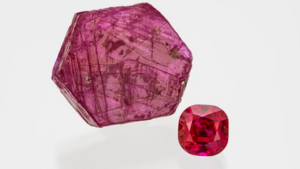
Conclusion: Empowered by Technology, Bringing the “Red of Rebirth from Fire” into Ordinary Life
The “rebirth from fire” of natural rubies is a gift from nature. After hundreds of millions of years of precipitation, it is precious but scarce; while the “journey of rebirth from fire” of artificial synthetic rubies is a miracle of technology. With human wisdom simulating nature, this fiery brilliance is no longer limited by scarcity, and enters ordinary life at an affordable price.
This “rebirth from fire” led by technology has not weakened the beauty and value of rubies, but has allowed more people to own this fiery luster — it carries human awe for nature, exploration of technology, and more importantly, everyone’s pursuit of beauty and refinement. Every synthetic ruby is a witness to a rebirth from fire, and a perfect integration of technology and aesthetics.