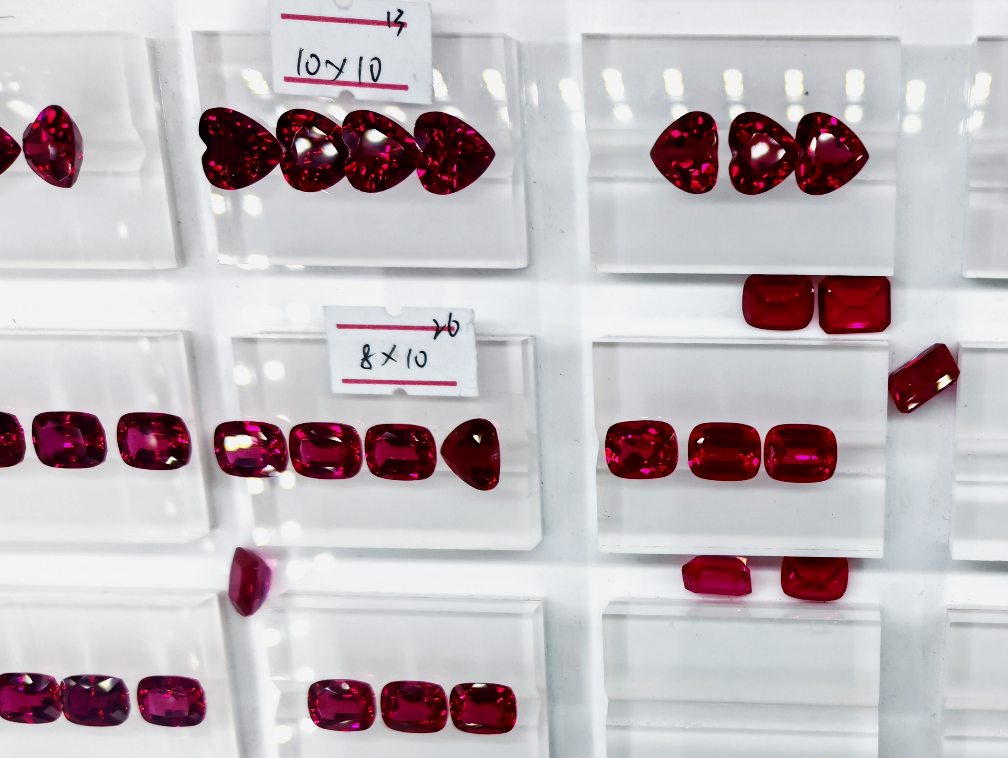
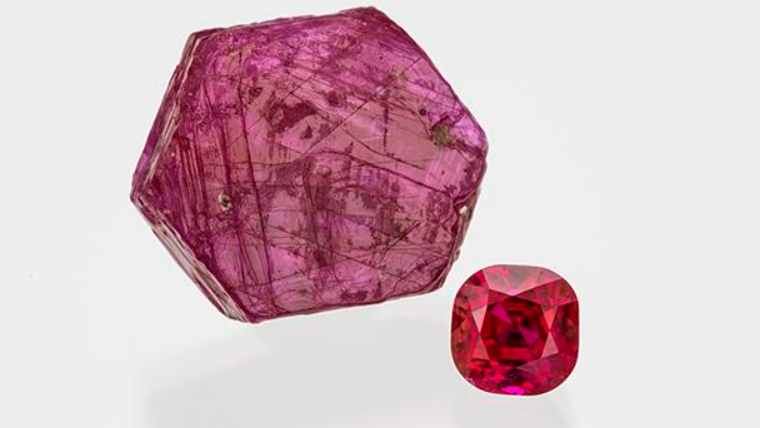
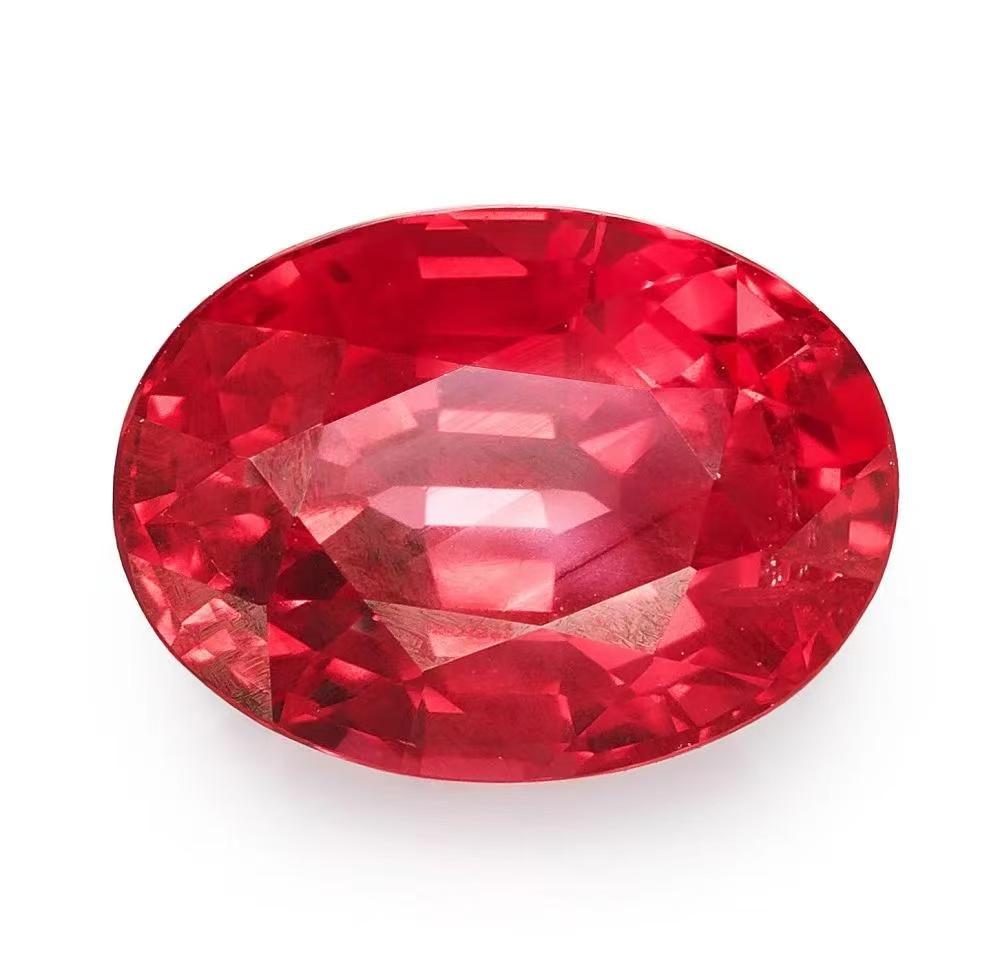
Synthetic rubies have become a popular choice in both jewelry and industrial applications. But what exactly is a synthetic ruby made of? Is it the same as a natural ruby? In this article, we’ll explore the composition, creation methods, and key differences of synthetic rubies in detail.
Main Components of Synthetic Ruby
Synthetic ruby is primarily composed of aluminum oxide (Al₂O₃), just like natural ruby. Its rich red color comes from the addition of small amounts of chromium (Cr).
| Element | Chemical Formula | Function |
|---|---|---|
| Aluminum Oxide | Al₂O₃ | Forms the corundum crystal structure of ruby |
| Chromium | Cr | Provides the vivid red color |
So in essence, synthetic rubies are chemically and structurally identical to natural rubies.
How Are Synthetic Rubies Made?
There are three main methods used to create synthetic rubies:
- Flame Fusion (Verneuil Process): The most common method. It melts aluminum oxide powder with chromium to quickly form ruby crystals. These often have curved growth lines under magnification.
- Flux Growth: Simulates natural conditions to slowly grow crystals. The quality is closer to natural ruby but the process is slower and more expensive.
- Hydrothermal Method: Uses high pressure and temperature to grow rubies in a solution. Less common for rubies, but yields very high-quality crystals.
Synthetic vs. Natural Ruby: What’s the Difference?
| Aspect | Synthetic Ruby | Natural Ruby |
|---|---|---|
| Origin | Lab-grown | Formed through geological processes |
| Purity | Often flawless or very clean | Usually contains inclusions |
| Cost | Affordable | Expensive, especially high-grade stones |
| Customization | Controlled color, size, and shape | Naturally limited variations |
| Identification | Requires gemological tools | Each piece is unique |
Applications of Synthetic Rubies
Besides jewelry, synthetic rubies are widely used in:
- Laser technology (ruby lasers)
- Precision watch bearings
- Scientific and industrial instruments
Frequently Asked Questions (FAQ)
Is a synthetic ruby a fake gemstone?
No. A synthetic ruby is a real ruby with the same chemical composition and crystal structure as a natural ruby — the only difference is that it’s lab-created instead of naturally formed.
How can you tell if a ruby is synthetic?
Visual inspection may not be enough. Gemologists use tools to examine internal features like curved growth lines or bubble inclusions that are typical of certain lab methods.
Will synthetic rubies fade or degrade over time?
No. Synthetic rubies have the same hardness (Mohs 9) and stability as natural rubies. They are highly durable and suitable for everyday wear.
Are synthetic rubies suitable for engagement rings?
Absolutely. They offer the elegance of ruby at a fraction of the cost, making them a practical and beautiful choice for engagement jewelry.
Is synthetic ruby the same as cubic zirconia or glass?
No. Cubic zirconia and glass may look similar, but they do not share the same structure or durability. Synthetic ruby is a true corundum gemstone.
Conclusion
Synthetic rubies consist of aluminum oxide and trace chromium, just like natural rubies. With advanced manufacturing techniques, they provide the beauty of ruby at an accessible price — making them ideal for jewelry, technology, and beyond.
Looking for high-quality lab-created ruby jewelry or materials? Contact us to learn more about our custom design services and product solutions.