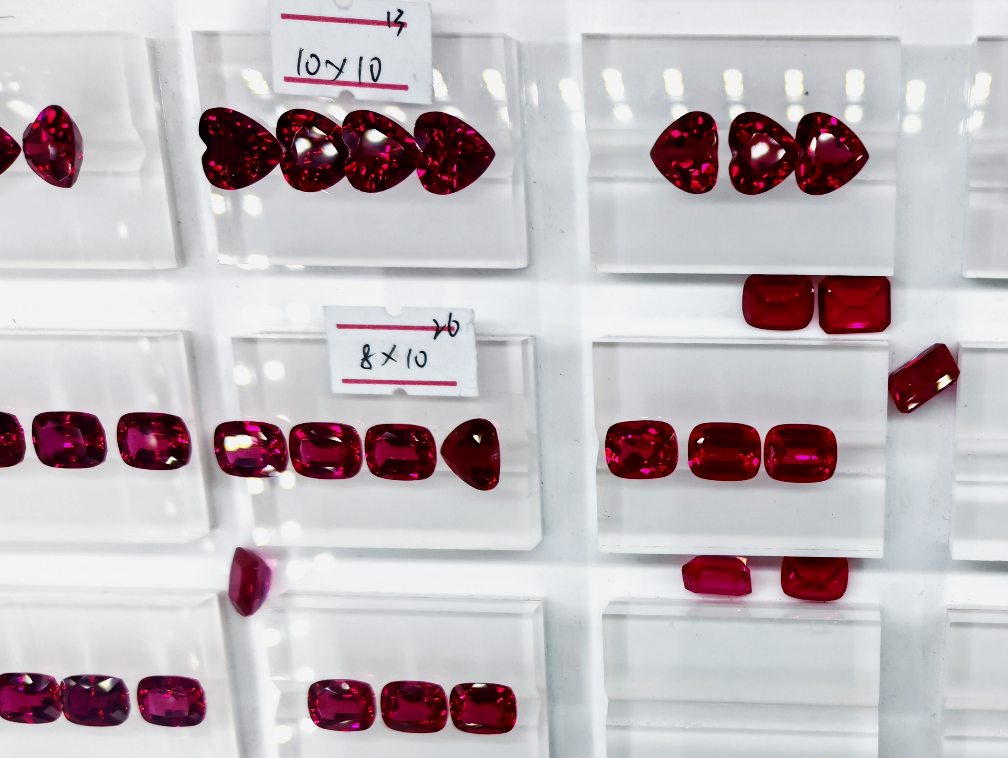
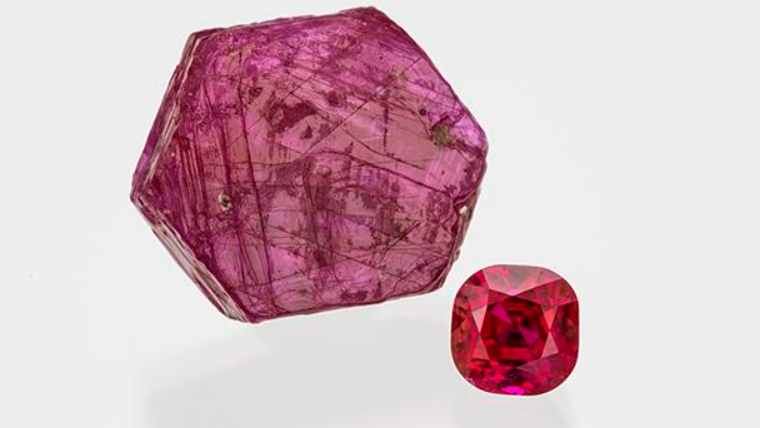
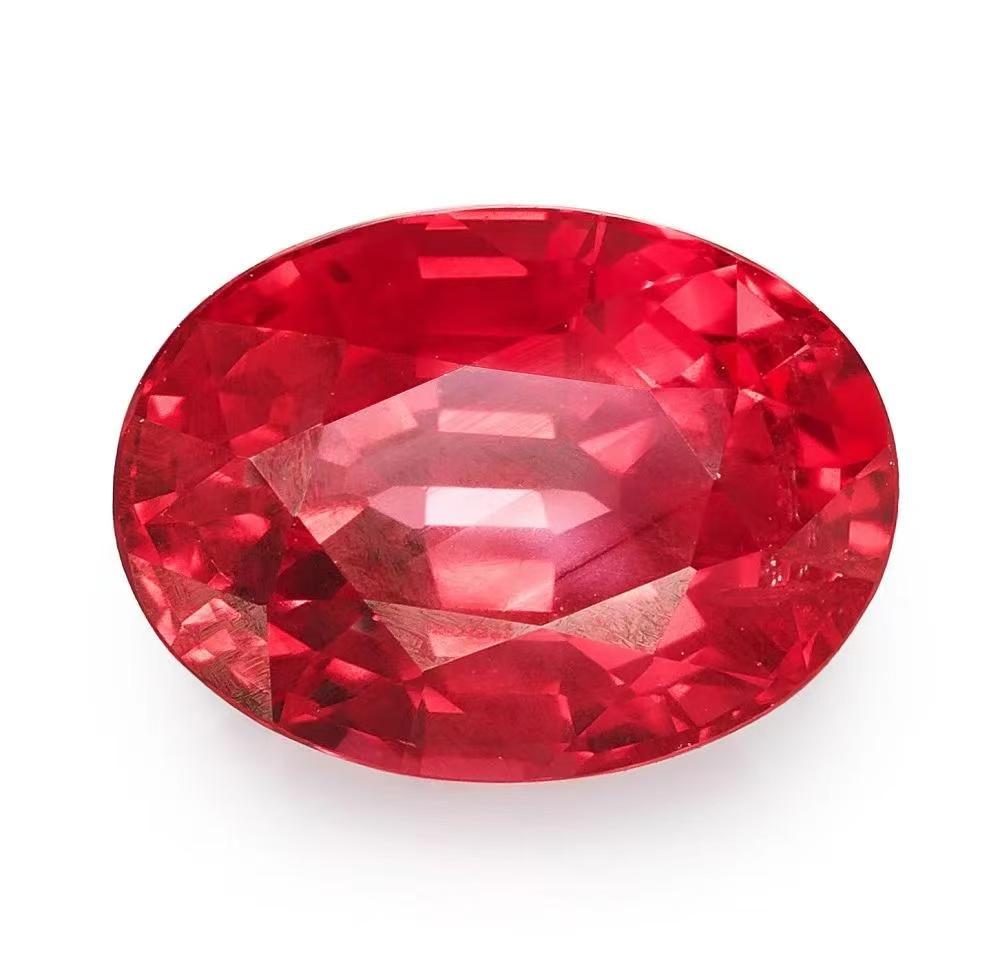
In recent years, synthetic rubies have become increasingly popular in the gemstone market due to their high similarity to natural rubies in chemical composition, physical properties and appearance, as well as their more affordable prices. Unlike natural rubies, whose prices are sky-high due to scarcity and geological rarity, synthetic ruby prices are more stable and accessible, varying significantly according to factors such as synthesis technology, quality, size and application scenarios. This article will comprehensively introduce the current market prices of synthetic rubies, decode the price differences and help you understand the pricing logic of synthetic rubies.
Core Factor 1: Synthesis Technology — The Primary Determinant of Price
The price of synthetic rubies is first and foremost determined by the synthesis technology. Different synthesis methods vary greatly in terms of equipment investment, production cycle, and product quality, which directly affects the final pricing. At present, the three mainstream synthesis technologies on the market are Verneuil method, flux method and hydrothermal method, with distinct price gradients.
- Verneuil Method: The Most Economical Choice
As the most mature and widely used synthetic technology, the Verneuil method has the advantages of short production cycle (only a few days) and low equipment cost, making it the most cost-effective type of synthetic ruby. The current market price of Verneuil synthetic rubies ranges from $1 to $20 per carat, or about 50 to 100 yuan per carat in RMB. Due to the rapid growth rate, the crystals of this type of synthetic ruby have obvious curved growth lines and small bubbles, which are mainly used for daily jewelry inlays, such as ordinary rings, earrings and necklaces, and are favored by consumers who pursue cost-effectiveness.
- Flux Method: Mid-Range Pricing with Natural-Like Quality
The flux method simulates the natural growth environment of rubies more closely, with a longer production cycle (several weeks to months) and higher equipment and technical requirements than the Verneuil method. The synthetic rubies produced by this method have higher clarity, more complete crystals, and their internal inclusions are very similar to natural rubies, which are difficult to distinguish with the naked eye. The current market price is between $100 and $500 per carat, or about 300 to 400 yuan per carat in RMB, which is suitable for consumers who pursue higher quality and want to balance cost and texture.
- Hydrothermal Method: Premium Pricing for Top-Quality Products
The hydrothermal method is the most complex and advanced synthesis technology, which perfectly replicates the high temperature and high pressure environment deep in the earth, with the longest production cycle (several months) and the highest cost. The synthetic rubies produced by this method have extremely high purity, uniform color, and their growth lines and inclusions are almost the same as high-quality natural rubies, even comparable to natural pigeon blood rubies. The current market price is between $200 and $600 per carat, or about 800 to 1500 yuan per carat in RMB, and the price of high-quality products can be even higher. This type of synthetic ruby is mainly used for high-end jewelry customization and high-precision industrial applications.
Core Factor 2: Quality Indicators — Further Impact on Price
On the basis of the same synthesis technology, the quality of synthetic rubies (color, clarity, cut) will further affect the price, with a price difference of 2-5 times between high and low grades. This is consistent with the pricing logic of natural rubies, but the overall price is still much lower.
Color: The Key to Price Premium
The color of synthetic rubies is mainly determined by the content of chromium element. The more uniform and intense the color, the higher the price. Among them, the “pigeon blood red” with pure and bright color and slight purple tone is the most valuable, and its price is 30%-50% higher than that of ordinary red synthetic rubies. The price of light red or uneven color synthetic rubies is relatively low, usually at the lower end of the price range of the corresponding synthesis technology.
Clarity: The Higher the Purity, the Higher the Price
Clarity refers to the number of inclusions and flaws inside the synthetic ruby. The fewer the inclusions and the higher the transparency, the higher the price. High-purity synthetic rubies with almost no inclusions are often used for high-end jewelry, and their price can be twice as high as that of synthetic rubies with more inclusions. It should be noted that the Verneuil method synthetic rubies usually have more inclusions, while the hydrothermal method synthetic rubies have the highest clarity.
Cut: Precision Improves Value
Exquisite cutting can maximize the fire and luster of synthetic rubies, thereby increasing their value. Hand-cut synthetic rubies are more expensive than machine-cut ones, with a price difference of about 20%-30%. Common cutting styles such as round, pear-shaped and emerald-cut also have slight price differences, among which round-cut synthetic rubies with high symmetry are more expensive due to higher material loss during cutting.
Core Factor 3: Size and Application Scenarios — Supplementary Factors Affecting Price
The size of synthetic rubies (carat weight) and their application scenarios also have a certain impact on the price, and the price increase is not linear, but shows an upward trend with the increase of carat weight.
Size: The Premium of Large Carat
For synthetic rubies of the same technology and quality, the price per carat will increase with the increase of carat weight. For example, 1-carat Verneuil method synthetic rubies cost about $5-$10 per carat, while 3-carat ones cost about $15-$25 per carat. Large carat synthetic rubies (more than 5 carats) are relatively rare, especially those with high quality, and their price per carat can be increased by 50% or more.
Application Scenarios: Jewelry Grade vs Industrial Grade
Synthetic rubies are divided into jewelry grade and industrial grade according to their application scenarios, with obvious price differences. Jewelry-grade synthetic rubies have high requirements for color, clarity and cut, and their price is 3-10 times that of industrial-grade ones. Industrial-grade synthetic rubies are mainly used in lasers, watches, high-precision instruments and other fields, with low requirements for appearance, and the price is usually between $0.1 and $5 per carat, or even lower in bulk purchases.

Current Market Price Summary & Purchase Suggestions
To sum up, the current market price of synthetic rubies shows a clear gradient, which can be roughly divided into three tiers according to synthesis technology and quality:
- Entry-level (Verneuil method): $1-$20 per carat (about 50-100 yuan per carat), suitable for daily wear and affordable jewelry;
- Mid-range (flux method): $100-$500 per carat (about 300-400 yuan per carat), suitable for consumers who pursue natural-like quality and cost performance;
- High-end (hydrothermal method): $200-$600+ per carat (about 800-1500+ yuan per carat), suitable for high-end jewelry customization and collection.
It is worth noting that the current global synthetic ruby market is growing steadily, with an annual growth rate of 6.2%, and the price is relatively stable compared with natural rubies. When purchasing, it is recommended to distinguish the synthesis technology, check the product certificate, and choose the appropriate synthetic ruby according to your own needs and budget, so as to avoid overpaying for unnecessary quality premiums.
Price Comparison: Synthetic Rubies vs Natural Rubies
The biggest advantage of synthetic rubies in price is their obvious gap with natural rubies. The price of ordinary natural rubies is at least $1000 per carat, while high-quality natural pigeon blood rubies from Myanmar can reach more than $14000 per carat, which is dozens or even hundreds of times that of synthetic rubies. For consumers who pursue the beauty and texture of rubies but do not have high requirements for “natural scarcity”, synthetic rubies are undoubtedly a more cost-effective choice.