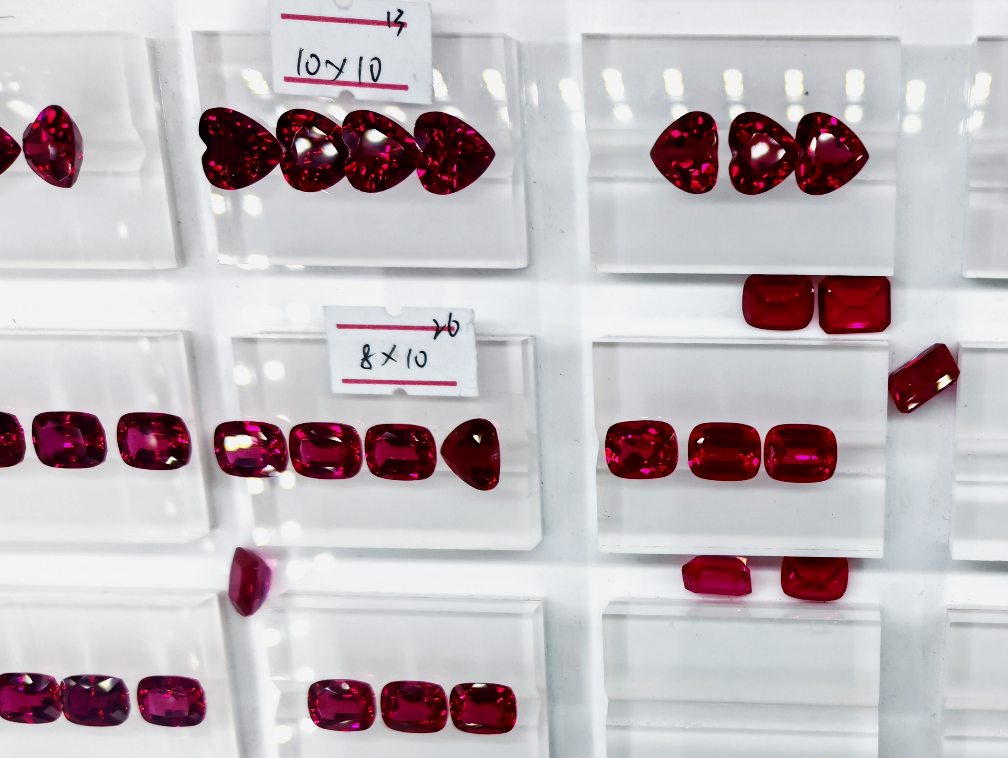
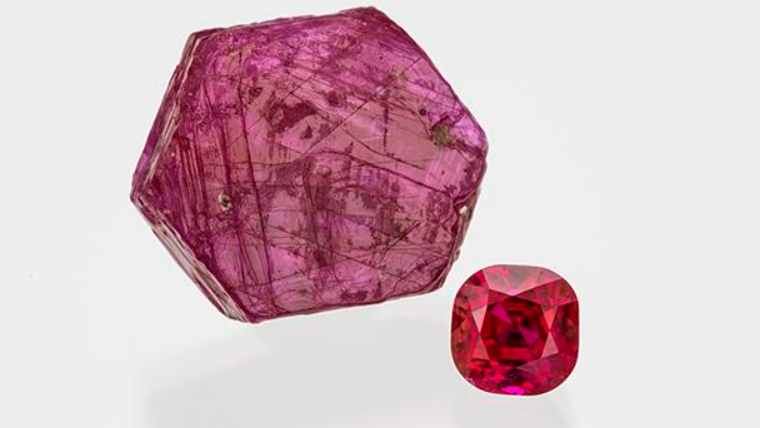
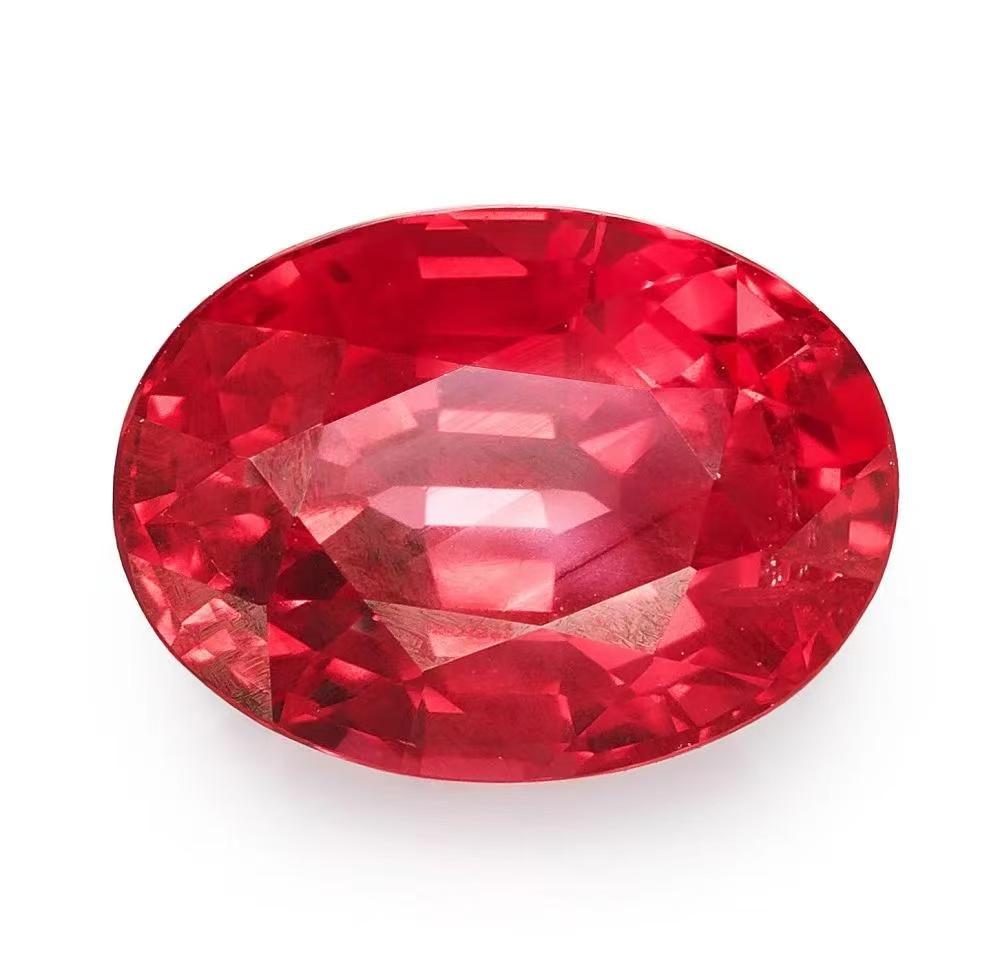
So, do synthetic rubies have curved growth striae? Yes, many of them do. In fact, curved striae are a hallmark of certain synthetic ruby manufacturing methods. Let’s take a closer look at what they are, how they form, and why they matter.

What Are Growth Strategies?
Growth striae (or growth lines) are internal patterns left behind during the crystal’s formation. In rubies, these lines can help reveal whether a gem is natural or synthetic.
- Natural rubies typically display straight or angular striae.
- Synthetic rubies—especially those created by the flame fusion process—often show curved growth striae.
These lines are not visible to the naked eye but can be seen under magnification by trained gemologists.
Why Do Synthetic Rubies Show Curved Striae?
The curved appearance is directly linked to the method used to create the ruby. The most common cause is the Verneuil process—also known as flame fusion.
1. Flame Fusion (Verneuil Method)
This is the oldest and most widely used technique for growing synthetic rubies. In this method, powdered aluminum oxide and chromium (for color) are melted with a high-temperature flame. The molten material is then deposited layer by layer on a rotating pedestal, forming a crystal boule.
Because the crystal grows in a rounded, rotating environment, the growth lines curve naturally. The result? Curved growth striae—a telltale sign of flame-fusion synthetic rubies.
2. Other Methods (Flux and Hydrothermal)
Rubies grown by flux growth or hydrothermal methods may exhibit striae that are straighter and more similar to natural stones. These advanced methods create more natural-looking inclusions, but they’re slower and more expensive.
Do Curved Striae Mean Lower Quality?
Not at all. Curved growth striae are a scientific result of a controlled lab process. They do not affect the beauty, durability, or brilliance of the ruby. In fact, many synthetic rubies with curved striae look stunning and perform beautifully in jewelry.
However, these striae are extremely useful for gem identification. For collectors, gemologists, and ethical jewelers, understanding the origin of a stone is important—and curved striae provide a reliable clue.
Our Perspective at Synthetic-Ruby.com
At Synthetic-Ruby.com, we see curved growth striae not as a flaw, but as a fascinating fingerprint of technology and crystal science.
They reflect the remarkable process of gemstone creation and offer transparency in a world where origin matters. For buyers who value clarity about their gemstones’ background, this is a feature—not a drawback.
We believe that beauty lies not only in the appearance of the gem, but in understanding the journey it took to reach your hand—whether grown by nature or by human innovation.
Conclusion
Yes—synthetic rubies can and often do have curved growth striae, especially those produced via flame fusion. These striae are more than just internal patterns—they are visual signatures of the method used to create the gemstone.
They help gemologists identify synthetic stones, educate consumers, and celebrate the science of crystal growth. In the world of modern gemstones, curved striae are a reminder that innovation can be just as dazzling as nature.
Frequently Asked Questions
What are curved growth striae in synthetic rubies?
Curved growth striae are internal lines that form during the crystal growth process. In synthetic rubies—especially those made by flame fusion—they appear as curved lines under magnification and are a key indicator of lab-grown origin.
Do natural rubies have curved striae?
No. Natural rubies typically exhibit straight or angular growth striae, not curved ones. Curved striae are generally associated with synthetic rubies made via the Verneuil (flame fusion) method.
How can gemologists detect curved growth striae?
Gemologists use magnification tools such as microscopes to examine internal features. Under proper lighting, curved striae appear as arc-like lines and help identify the stone’s synthetic origin.
Do curved striae affect the quality or beauty of the ruby?
Not at all. Curved striae are a natural result of the lab creation process and have no negative impact on the ruby’s beauty, brilliance, or wearability. They are invisible to the naked eye and purely diagnostic.
Are all synthetic rubies made with curved striae?
No. Only rubies made with flame fusion (Verneuil) typically show curved striae. Those made via flux or hydrothermal methods may exhibit straight or more natural-like striae.