1. Why Is Synthetic Ruby Considered a Mineral?
Although the word “synthetic” implies artificial origin, synthetic ruby meets the scientific definition of a mineral.
In mineralogy, a mineral is defined as a solid substance with a specific chemical composition and crystal structure. Synthetic ruby fits this definition perfectly: it is composed of aluminum oxide (Al₂O₃) and doped with chromium (Cr³⁺), which gives it its vivid red color. Its crystal structure is trigonal—exactly the same as natural ruby.
Therefore, while synthetic rubies are man-made, they are identical to natural rubies in chemical, physical, and structural properties, making them a type of artificial mineral.
2. What Kind of Mineral Is Synthetic Ruby?
Synthetic ruby belongs to the corundum mineral family. It is essentially a chromium-doped aluminum oxide crystal, known for its hardness and stability.
- Hardness: 9 on the Mohs scale—second only to diamond.
- Color: Bright red due to chromium ions (Cr³⁺).
- Crystal structure: Trigonal, same as natural corundum.
- Stability: Chemically inert, heat-resistant, and corrosion-resistant.
Synthetic rubies are typically produced using techniques such as the Verneuil flame fusion method, flux growth, or Czochralski pulling. These methods allow precise control over purity, color, and size.
3. What Makes Synthetic Ruby Unique?
Compared to natural rubies, synthetic rubies offer several advantages:
- High consistency: Controlled color, size, and clarity in lab settings.
- Fewer inclusions: Often cleaner and more flawless than natural stones.
- Affordable: Much lower cost than natural rubies.
- Visually similar: Nearly indistinguishable from natural rubies to the naked eye.
These advantages make synthetic rubies ideal not only for jewelry but also for industrial and scientific use.
4. What Are the Uses of Synthetic Ruby?
Synthetic ruby is not just for aesthetic appeal—it plays a significant role in modern technology and industry.
Jewelry
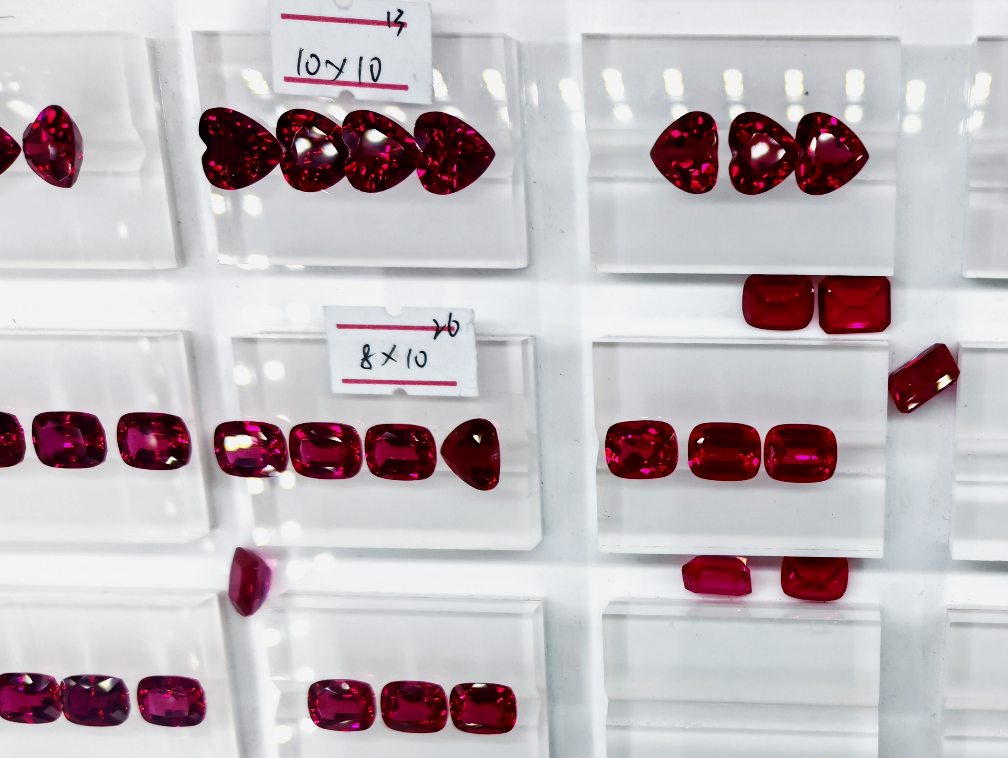
Used as a more affordable alternative to natural rubies in rings, necklaces, earrings, and other accessories.
Laser Technology
Synthetic ruby was the material used in the world’s first laser. Ruby lasers are still used in medicine, measurement, and communication systems.
Watch Bearings
Due to its hardness and durability, synthetic ruby is used in high-precision watch movements as pivot bearings.
Scientific Research
Used in optics, high-pressure experiments, and as seed crystals for further crystal growth.
Precision Components
Found in aerospace, military, and high-end instrumentation applications.
Conclusion
Synthetic ruby is a man-made mineral that possesses all the essential properties of a true mineral. With its identical structure to natural ruby and its outstanding qualities—such as hardness, stability, and optical clarity—it has become indispensable across multiple industries. While it may not be “natural,” it is a scientific and technological marvel in its own right.
So, is synthetic ruby a mineral? The answer is clear: Yes, it is—just one created by human hands.