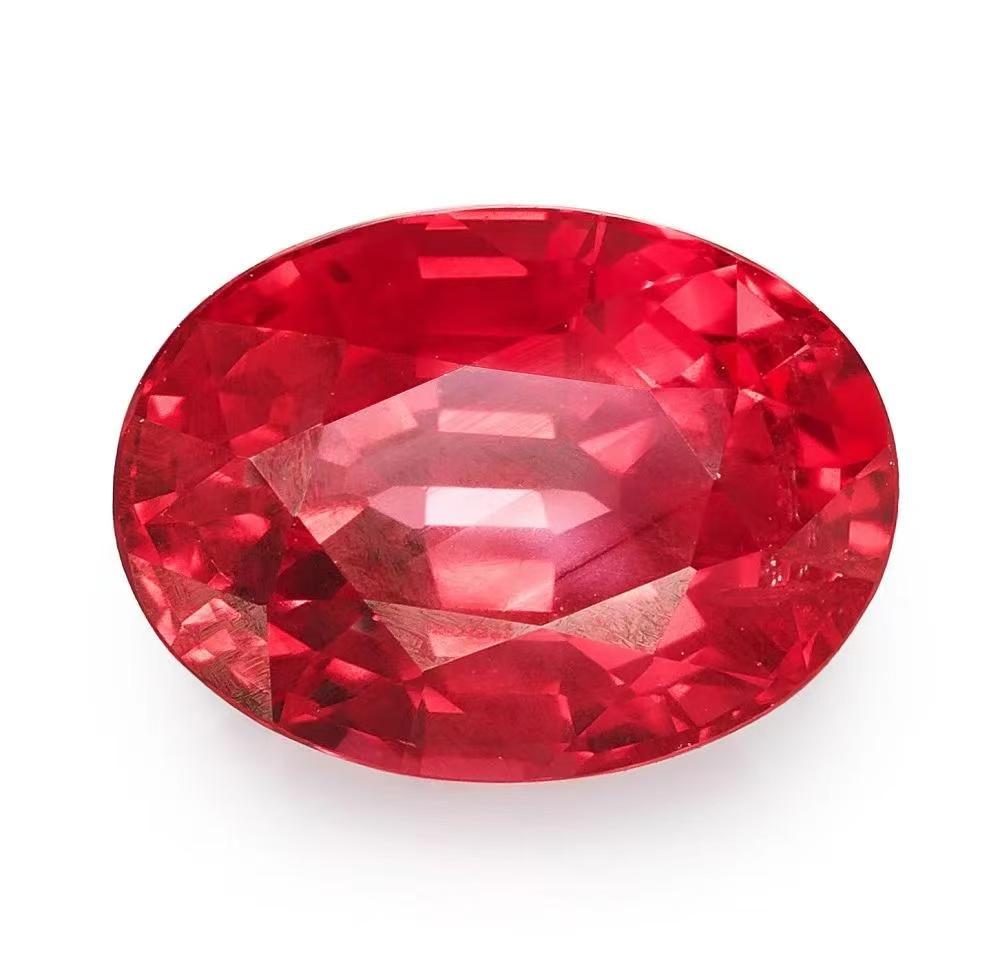
Ruby, one of the most precious gemstones, has been sought after by royals and collectors since ancient times. However, the scarcity and high price of natural rubies have prompted scientists to search for artificial substitutes. So, when were synthetic rubies first made? Let’s explore the development history of this gem science.

⏳ I. When Were Synthetic Rubies First Made?
✅ First successful synthesis: 1902
- The first synthetic rubies were successfully made in 1902 by French chemist Auguste Verneuil.
- He invented the Verneuil process, also known as the flame fusion method, which became the first commercially viable method for large – scale production of synthetic rubies.
📌 Although earlier attempts to create artificial rubies began in the late 1800s, they were unstable and experimental. Verneuil’s method was the first breakthrough that made gem – quality synthetic rubies available to the public.
🔬 II. The Development History and Technological Evolution of Synthetic Rubies
Since the advent of the Verneuil method, the technology for synthesizing rubies has continuously evolved, gradually approaching the optical properties and inclusion characteristics of natural rubies. The following is a timeline of the main technologies:
| Years | Method | Characteristics | Similarity to Natural Rubies |
|---|---|---|---|
| 1902 | Flame Fusion (Verneuil) | The first successful method, fast and low – cost | ❌ Obvious arc – shaped growth lines and bubbles |
| 1950s | Flux – grown | High – temperature solvent crystallization, more natural | ✅ More inclusions, irregular textures |
| 1980s | Hydrothermal | Simulating the underground pressure hydrothermal environment | ✅ Extremely similar to natural ones, highest cost |
📍 Although the Flux – grown and Hydrothermal methods are more expensive than the Flame Fusion method, they are closer to natural rubies and are therefore often used in high – end jewelry or research fields.
🔧 III. The Application Fields of Synthetic Rubies
Synthetic rubies are not “fake rubies”. They have the same chemical composition as natural rubies (mainly aluminum oxide Al2O3 + trace chromium). The main difference lies in the formation process.
The main uses of synthetic rubies:
- 💍 Jewelry making: Low cost, suitable for daily wear.
- ⌚ Precision instruments: Such as watch bearings (low friction, wear – resistant).
- 💡 Ruby lasers: The earliest solid – state lasers used synthetic rubies.
- 🧪 Scientific research experiments: Optical and crystal structure research, etc.
🆚 IV. Synthetic Rubies vs Fake Rubies vs Natural Rubies
| Type | Formation Method | Composition | Value | Is it a “True Gemstone”? |
|---|---|---|---|---|
| Natural Ruby | Formed naturally underground | Al2O3 + Cr | 💰 Extremely high | ✅ Yes |
| Synthetic Ruby | Synthesized in the laboratory | Al2O3 + Cr | 💰 Medium | ✅ Yes |
| Fake Ruby (e.g., Glass) | Imitated | Glass or other synthetic materials | ❌ None | ❌ No |
👉 Synthetic rubies are real gemstones (synthetic, not fake). They are just not naturally formed, while fake rubies are imitations without any gemstone characteristics.
✅ Summary
When were synthetic rubies first made?
The answer is: In 1902, French chemist Auguste Verneuil invented the flame fusion method, achieving the first truly successful production of synthetic rubies by humans.
The answer is: In 1902, French chemist Auguste Verneuil invented the flame fusion method, achieving the first truly successful production of synthetic rubies by humans.
Since then, synthetic rubies have not only changed the jewelry market but also promoted the development of laser technology and precision instruments.
Today, understanding the history of these different synthetic methods helps us more scientifically judge the value of gemstones and make choices.
Today, understanding the history of these different synthetic methods helps us more scientifically judge the value of gemstones and make choices.