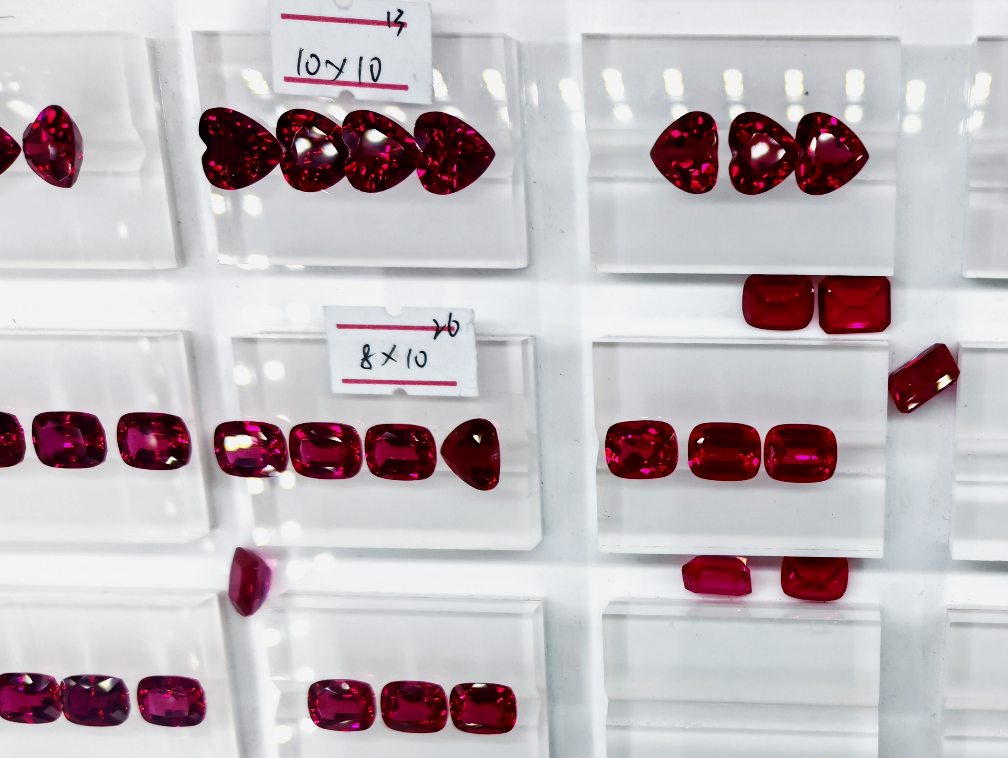
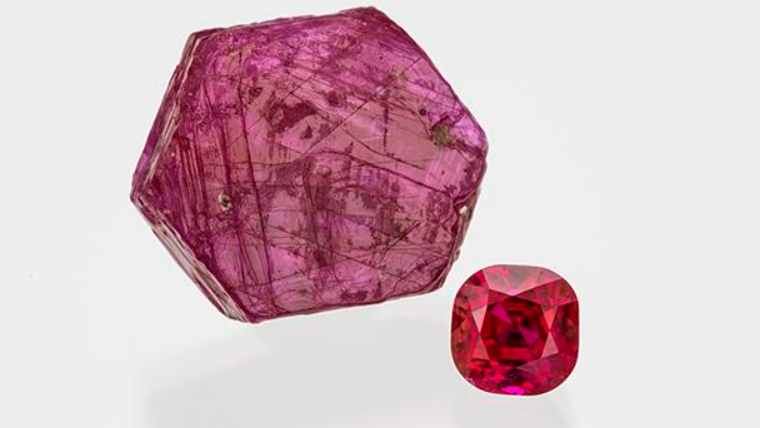
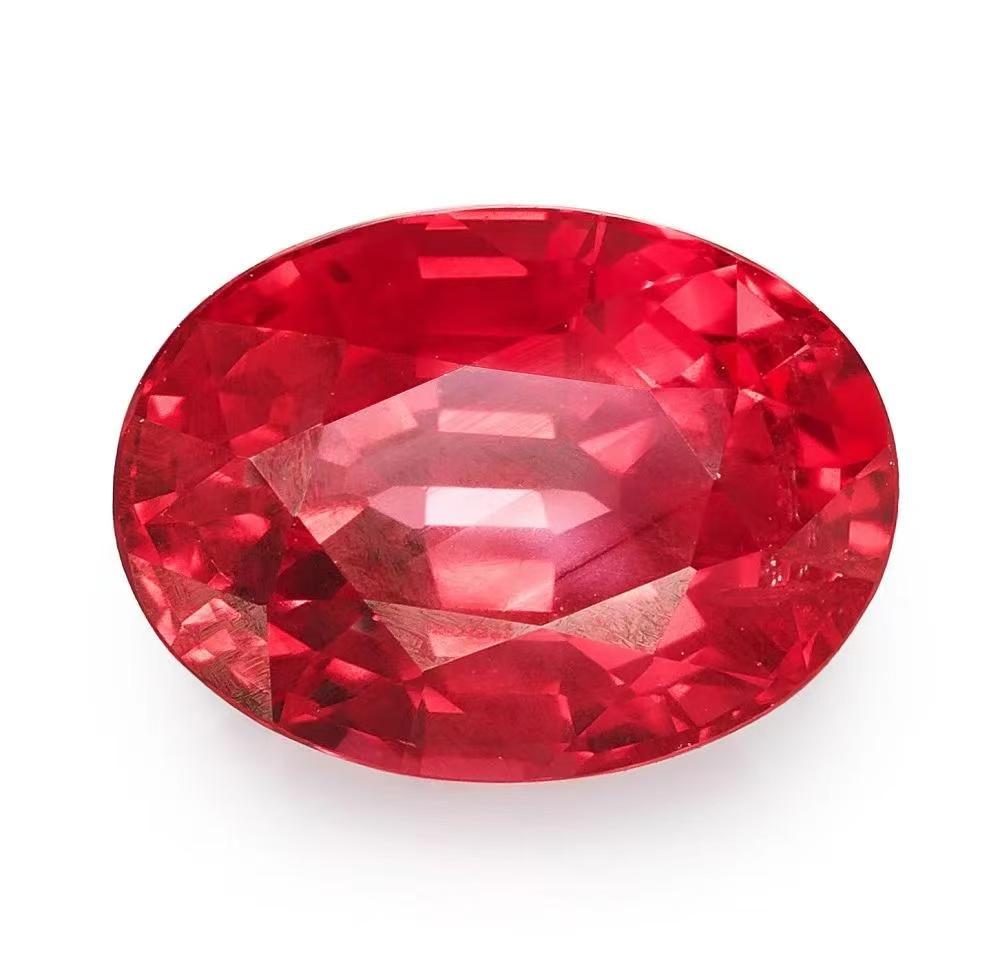
Synthetic rubies have long intrigued jewelry enthusiasts, designers, and even scientists with their alluring beauty and wallet-friendly nature. They stand as popular alternatives to their natural counterparts, yet they hold significant value in their unique ways. So, the question on many minds is: how much are synthetic rubies worth? Let’s explore this topic in a detailed and practical manner.
✅ Are Synthetic Rubies Valuable?
The answer is a resounding yes. Synthetic rubies are indeed valuable. While they lack the rarity and investment allure of natural rubies, they offer a plethora of advantages that contribute to their worth. Chemically, they are identical to natural rubies, consisting of Al₂O₃ with chromium, and possess the same physical and optical properties. This means they can exhibit the same stunning red color and brilliance that make rubies so desirable.
💎 Where Does Their Value Come From?
1. **Aesthetic Value**: One of the primary sources of value for synthetic rubies is their aesthetic appeal. They showcase a vivid red color that can range from a deep, rich hue to a more vibrant shade, depending on the specific manufacturing process and the amount of chromium present. Their high clarity gives them a radiant quality, making them visually captivating. Whether set in a simple pendant or a more elaborate piece of jewelry, synthetic rubies can add a touch of elegance and glamour. For example, a synthetic ruby-studded necklace can be a statement piece that complements various outfits, from casual to formal.
2. **Economic Value**: Their lower cost compared to natural rubies is a major selling point. This affordability makes them accessible to a wider range of consumers. Instead of having to save up a fortune for a natural ruby, individuals can purchase a synthetic one at a fraction of the price. This also makes synthetic rubies perfect for daily wear. People don’t have to worry as much about damaging an expensive natural gemstone when going about their daily activities. For instance, a synthetic ruby ring can be worn every day without the constant fear of losing its value due to scratches or minor chips.
3. **Functional Value**: Beyond the world of jewelry, synthetic rubies have functional applications. Their physical durability makes them suitable for use in lasers, scientific equipment, and watch bearings. In lasers, synthetic ruby crystals are used to generate intense light beams. In scientific research, they can be part of optical components in experimental setups. In the watch industry, synthetic ruby bearings help reduce friction, ensuring the smooth operation of watch mechanisms. This practical utility in different fields adds to their overall value.
4. **Design Potential**: The perfect clarity and controlled color of synthetic rubies open up exciting design possibilities for jewelry designers. They can create bold and consistent pieces with a high degree of precision. Since synthetic rubies can be produced with a more uniform color and fewer inclusions compared to natural ones, designers can rely on them to achieve a specific look. For example, they can create a set of earrings or a bracelet where each synthetic ruby matches exactly in color and clarity, resulting in a harmonious and visually appealing design.
5. **Brand Premium**: Well-known lab-gem producers, such as Chatham, can command higher prices for their synthetic rubies. These brands often offer premium cuts and high-quality products. Their reputation in the market, built on years of expertise and consistent quality, allows them to charge a premium. Consumers are willing to pay more for synthetic rubies from these trusted brands because they know they are getting a product of superior craftsmanship and quality.
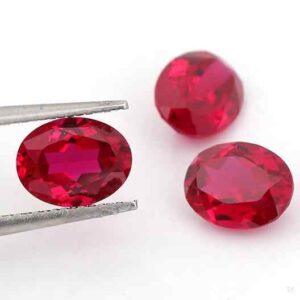
💰 How Much Are Synthetic Rubies Worth? (With Real Numbers)
The pricing of synthetic rubies is influenced by several factors, including the production method, quality, and intended use.
1. **Basic commercial-grade**: Synthetic rubies produced using the Verneuil (Flame fusion) method are often mass-produced. These basic commercial-grade stones typically range from $1 – $10 per carat. The Verneuil method involves melting aluminum oxide powder with a small amount of chromium oxide (to give the red color) and allowing it to solidify into a ruby-like crystal. However, due to the nature of this mass-production process, these rubies may show color zoning, where the color is not evenly distributed throughout the stone.
2. **Mid-range/high-end**: When produced using the Flux or Hydrothermal methods, synthetic rubies can reach a mid-range to high-end price point. These methods result in better-quality stones with enhanced clarity and a more natural-looking appearance. Such synthetic rubies can cost anywhere from $100 – $500 per carat. The Flux method involves dissolving aluminum oxide and chromium in a flux (a molten substance) and then allowing the ruby crystals to precipitate out. The Hydrothermal method, on the other hand, grows rubies in a high-pressure, high-temperature aqueous solution. These more complex production methods yield stones that are closer in quality to natural rubies.
3. **Premium branded jewelry pieces**: For premium branded jewelry pieces that feature synthetic rubies, especially those produced hydrothermally and with the added value of branding, the price can be significantly higher. These can range from $500 – $2000 per item. In these cases, the cost includes not only the value of the synthetic ruby but also the designer cuts, high-quality settings, and the brand’s reputation. For example, a well-known jewelry brand may use synthetic ruby in a unique, hand-crafted setting, and the overall package is priced accordingly.
4. **Industrial-grade synthetic ruby**: Industrial-grade synthetic rubies, which are often in the form of crystal rods, are priced based on their length. They typically cost between $5 – $50 per cm. These are used in a variety of industrial applications, such as in lasers for cutting and welding, in optical instruments for precision measurements, and in mechanical devices such as bearings. Their value lies in their ability to perform specific functions in these industrial settings. It’s important to note that these are retail price estimates. Wholesale or bulk purchases usually come at a lower cost. For example, jewelry manufacturers who buy synthetic rubies in large quantities for mass-producing jewelry items can negotiate better prices per carat or per unit.
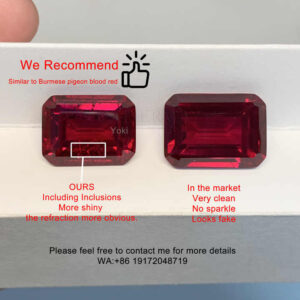
🔍 Synthetic vs. Natural Ruby: Value Comparison
1. **Composition**: Both synthetic and natural rubies have the same chemical composition, being composed of Al₂O₃ with chromium. This chemical similarity is what gives them their characteristic red color. However, the way they are formed leads to differences in other aspects.
2. **Origin**: Synthetic rubies are lab-grown, and created through carefully controlled processes in a laboratory environment. This allows for a more consistent production in terms of quality and quantity. In contrast, natural rubies are earth-mined, with significant sources in regions like Myanmar, Mozambique, and others. The mining process is much more complex, time-consuming, and dependent on geological factors, making natural rubies rarer.
3. **Price Range**: The price difference between synthetic and natural rubies is substantial. Synthetic rubies generally range from $1 – $500 per carat, depending on the factors mentioned earlier. Natural rubies, on the other hand, can command prices from $500 to a staggering $50,000+ per carat, especially for high-quality, untreated, and certified stones. The high price of natural rubies is due to their rarity, with top-grade “pigeon blood” rubies being extremely scarce.
4. **Rarity**: As mentioned, synthetic rubies are not rare as they can be mass-produced. This makes them more readily available in the market. Natural rubies, particularly those of the highest quality, are extremely rare. The formation of natural rubies requires specific geological conditions over long periods, and only a small percentage of the mined stones meet the high-quality standards.
5. **Investment Value**: Synthetic rubies have a low investment value. Their relatively easy production means that their supply can be increased as demand changes, and they do not appreciate in value over time like natural rubies. Natural rubies, especially untreated and certified ones, have a high investment value. Their rarity and desirability in the market make them attractive to investors, and their value has been known to increase over the years.
6. **Use in Fine Jewelry**: Synthetic rubies are widespread in fashion and design pieces. They are used in a variety of jewelry items, from trendy fashion jewelry to more high – end designer pieces where the focus is on the aesthetic rather than investment. Natural rubies, on the other hand, are more commonly found in premium collections and auction markets, where their rarity and value are highly prized.
🧠 Pro Tips: How to Judge the Value of a Ruby (Synthetic or Natural)
1. **Color**: The color of a ruby is crucial in determining its value. The ideal ruby has a vivid “pigeon blood” red color. This color is characterized by a high saturation and a slight blue undertone, which gives it a more intense and appealing look. Rubies with no brown or orange tinge are also more valuable. A ruby with a more muted or off-color tone will be less valuable. For example, a ruby that leans too much towards a brownish red may be considered of lower quality.
2. **Clarity**: Fewer inclusions generally mean a higher-value ruby. Inclusions are tiny imperfections within the stone. Synthetic rubies, due to their controlled production environment, are often flawless or have very few inclusions. Natural rubies, on the other hand, commonly have inclusions, such as needle-like structures known as silk. However, if the inclusions are too large or too numerous, they can affect the stone’s transparency and overall appearance, thus reducing its value.
3. **Cut**: Precision in the cut of a ruby is essential. A well-cut ruby will enhance its brilliance and fire. The cut should be such that it allows light to enter the stone, reflect off its internal surfaces, and then exit, creating a dazzling effect. Factors like the angles of the facets and the symmetry of the cut play a significant role. A poorly cut ruby may not sparkle as much and will have less value.
4. **Certification**: For natural rubies, gemological reports from reputable laboratories such as the Gemological Institute of America (GIA), the Gem Research Swisslab (GRS), etc., are crucial. These reports verify the authenticity, origin, and quality of the stone. For synthetic rubies, while they may not require the same level of gemological certification, they may come with origin documentation that indicates their lab-grown status.
5. **Microscopic Features**: Synthetic rubies may have certain microscopic features that distinguish them from natural ones. For instance, those produced using the Verneuil method may have gas bubbles or curved growth lines. Natural rubies, as mentioned earlier, often show needle-like inclusions (silk) that are a result of their natural formation process. By examining these microscopic features, one can get a better idea of whether a ruby is synthetic or natural and also assess its quality.
📝 Final Thoughts Synthetic rubies are valuable, but their value lies in different aspects compared to natural rubies. Their value is centered around their beauty, practicality, and affordability rather than investment or rarity. Whether you’re purchasing synthetic rubies for fashion purposes, as a gift, or for use in science and engineering, they offer remarkable value for the price. For the majority of consumers, synthetic rubies provide the perfect balance between luxury and budget. If you’re looking to enjoy the stunning look of a ruby without the hefty price tag associated with natural rubies, lab-created rubies are an excellent option. They allow you to own a beautiful piece of jewelry or use a functional gemstone in various applications without breaking the bank.